Dreams About Hair Falling Out — What They Might Mean
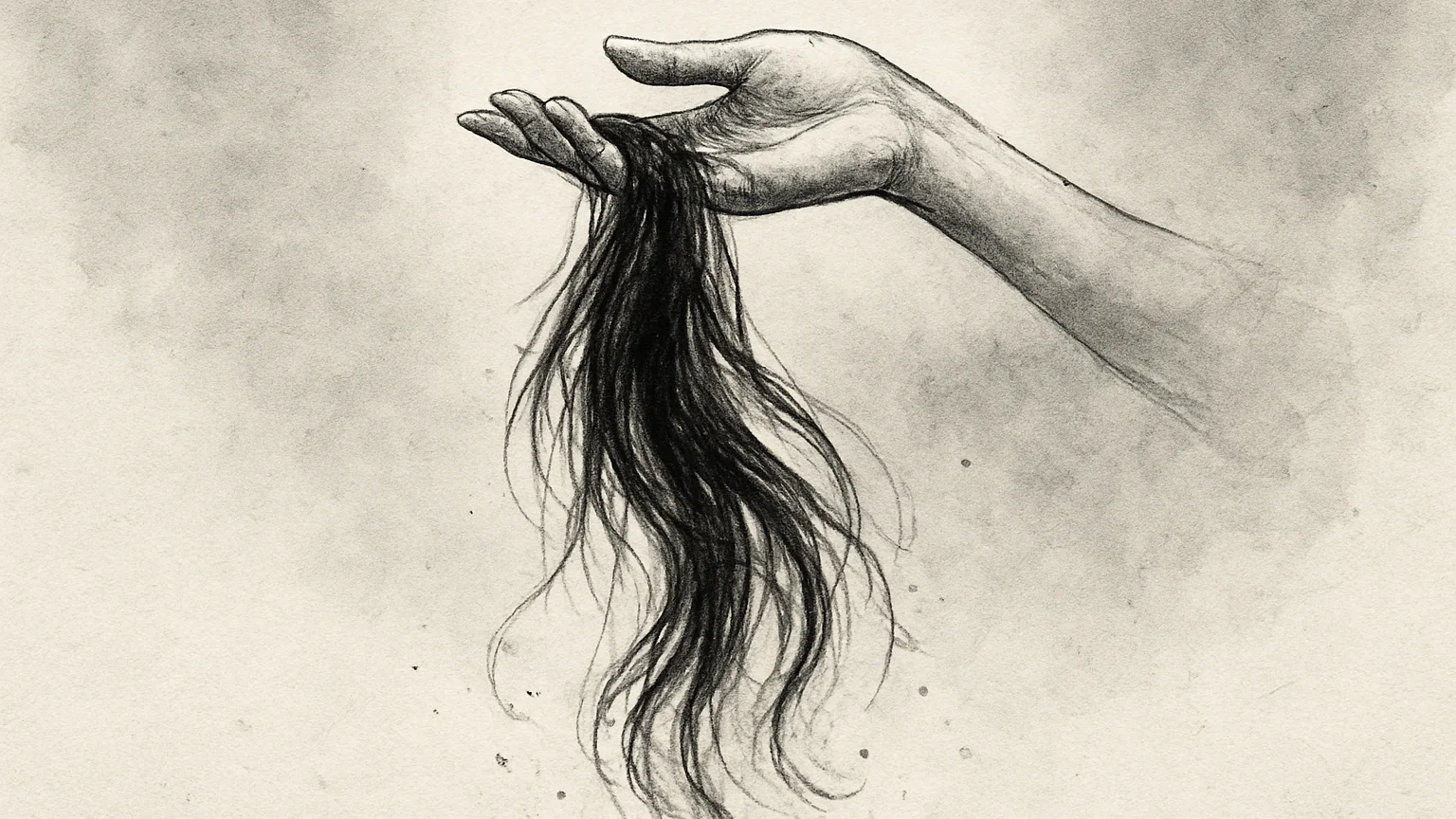
Dreams about hair falling out are the teeth dream’s quieter sibling — slower, less violent, and aimed somewhere different. Where teeth are structure, hair is vitality and the self others see; this dream tends to arrive in seasons of depletion, and in seasons when the visible you is changing.
What this dream might be about
It helps to ask what hair is, in the body’s economy, because the dream chooses its materials carefully. Hair is the body’s most editable feature — the one part of your appearance you’ve been revising your whole life, growing and cutting and coloring it into each successive version of yourself. It carries no nerves, does no work, and yet cultures everywhere have loaded it with meaning: strength, youth, gender, devotion, rebellion. It is, in short, the body’s identity document. So when it starts coming loose in a dream, the loss is rarely about hair. It’s about the self you’ve authored becoming — visibly, publicly — subject to revision by something that isn’t you.
That’s the first place this dream tends to visit: the seasons when time or circumstance starts editing without permission. Aging is the obvious one — this dream reliably finds people in the years when the mirror begins reporting small unauthorized changes — but it isn’t only age. Illness, recovery, a body changed by childbirth or treatment or simply a hard year: whenever the physical self is being rewritten by forces outside your authorship, the dream reaches for its most legible symbol of that. Hair going is change you can see — and change others can see, which is half the dream’s charge.
The second place is depletion, and here the dream gets almost literal. Hair is what the body grows from surplus — the first budget cut when resources run low — and the dream seems to know it. Hair-loss dreams cluster densely in the drained seasons: burnout, caregiving, grief, the long middle of any stretch that takes more daily than it gives back. The clumps version, especially — handfuls, faster than anything could replenish — is less a symbol than a gauge, the mind rendering its own reserves. If this dream arrived during a season that is visibly costing you, it may not be asking to be interpreted. It may be asking to be believed.
And running under both is the slower thread the teeth dream shares: erosion — loss in installments rather than events. Hair never falls all at once; it thins, which makes it the mind’s natural language for the losses that happen gradually enough to be deniable. The energy that used to be there. The closeness that used to be there. The version of yourself that has been leaving so slowly you couldn’t name a date. The dream gathers the evidence into a hairbrush and hands it to you — because thinning, unlike breaking, is only visible when you finally look.
None of these readings is the meaning. They’re the places this dream tends to visit. Which one it visited in you is something only your night, and the life around it, can say.
Hair coming out in clumps
Your hand through your hair, and the hand comes back full. The shower drain, the pillow, the brush — the dream stages it in the places where real hair actually announces itself, and it makes you hold the loss, which is the detail to take seriously. This is the depletion dream at full volume, and it tends to visit people being spent faster than they’re replenishing: the caregiver, the person carrying a team, the one holding a family through a hard stretch. The dream isn’t predicting collapse. It’s presenting the evidence of expenditure — in handfuls, so it can’t be rounded down.
Bald in the mirror
You catch your reflection and the hair is simply gone — sometimes gradually across the dream, sometimes all at once, a stranger with your face waiting in the glass. The mirror version is less about loss than about recognition: the gap between the self you carry inside and the one the world now receives. It tends to fire in the unauthorized-edit seasons — aging’s small announcements, a body changed by illness or time — and in identity shifts that have nothing to do with the physical: the person who no longer recognizes themselves in their job, their marriage, their own week. The dream’s question isn’t where did the hair go. It’s when did I last look, and who is this?
Someone cutting your hair without asking
Scissors in another’s hands — a barber who won’t stop, a faceless someone at the back of your head, a relative with opinions and shears. Consent transforms this dream the way the pushing hand transforms falling: this isn’t loss, it’s taking, and the taker matters. The version tends to visit people whose identity is being edited by someone else — the job remaking them, the relationship with strong ideas about who they should be, the family whose expectations come with scissors. Sometimes the cutter has a face you know. The dream is rarely subtle about casting, and it’s worth believing.
Gray or white overnight
Not falling — turning. You wake in the dream, or catch a window’s reflection, and the color has drained to silver in a night. This version is the dream’s time-lapse of time itself, and it tends to come when aging or mortality has recently stopped being theoretical: the milestone birthday, the parent’s decline, the health scare, the funeral that was the first of your own generation. Folklore says shock turns hair white overnight; the dream borrows the folklore to say something aged me lately, fast. What did is usually recent, and usually nameable.
Someone else’s hair falling out
Watching it happen to someone you love — their hair in their hands, their crown thinning while you stand unable to help. Like its teeth-dream counterpart, this version is usually about witnessing change in them: aging parents, a partner’s illness, a friend being visibly worn down by their life while you watch from the fixed distance of another person. Sometimes it borrows the specific imagery of real illness, and if someone in your life is in treatment or fresh out of it, the dream may simply be your worry, wearing their hair. The loss is staged on their head. The helplessness is yours.
Shaving it off yourself
The razor is in your own hand, and the dream that should be a nightmare isn’t — the hair comes away in swaths and what arrives in its place is something like air. Chosen loss is a different species from suffered loss, and this version tends to come at the threshold of deliberate reinvention: the identity retired on purpose, the role resigned, the long-maintained image finally set down. Every culture that shaves heads in ritual — monks, recruits, mourners, the newly free — knows what this dream knows: that removing the identity document yourself, before anyone can revise it for you, can feel less like losing and more like beginning. If you woke lighter, trust that. Some losses are exits.
What matters more than the symbol
Here is the honest limit of a page like this one: the same thinning weighs differently in different lives. Clumps in your hands during your third year of caregiving is not clumps in your hands the month you turn fifty, and neither is the mirror dream of someone six weeks into chemotherapy. A dictionary can tell you what a word tends to mean. It cannot tell you what the sentence meant — and the dream you had was a sentence, spoken once, in your voice, in the middle of your particular life.
No one can tell you what your dream means — including us. What the loss was doing in your night depends on what surrounded it: what is currently draining you or editing you, whose hands held the scissors, whether you watched it fall or pulled the razor across yourself, and what you felt at the mirror — dread, grief, or the strange lightness of a decision arriving. Those details are where the meaning lives, and they belong to you.
Before you go looking for meaning
One practical note. Hair is one place where the dream and the body genuinely tangle. Prolonged stress can cause real shedding — a well-documented pattern where hair lets go in waves two or three months after a hard stretch — which means a brutal season can produce both the dream and actual hair in the drain, same cause, two messengers. And if thinning is already a waking worry, the mind tends to dream the worry amplified. So if there’s real hair on the pillow, or the dream tracks a change you’ve half-noticed in the mirror, let a doctor hear about it before a dream dictionary does — stress shedding usually reverses, and ruling out the simple causes is quick. That doesn’t empty the dream of meaning; the mind chooses its stories even when the body supplies the material. But sometimes hair is trying to tell you about hair — and about the three months behind you.
Frequently asked questions
What does dreaming about hair falling out usually mean?
The pattern most often reported gathers around depletion and visible change — hair-loss dreams cluster in seasons of being drained (burnout, caregiving, long stress) and in seasons when the self others see is shifting: aging, illness, identity in transition. Where teeth dreams tend to be about structure failing, hair dreams tend to be about vitality and presentation thinning.
Does this dream mean I'm actually going to lose my hair?
The dream doesn't predict anything — but it can echo. If thinning is a live waking worry, the dream may be amplifying a real observation rather than encoding a symbol, and it means roughly what it shows. And since prolonged stress genuinely can cause real shedding months later, stress sometimes produces both the dream and the hair on the pillow — same cause, two messengers.
Why do I dream of hair coming out in clumps in my hands?
The clumps version is the depletion dream in its purest form — not gradual thinning but handfuls, faster than anything could regrow. It tends to visit people being drained faster than they're replenishing: caregivers, the burned out, anyone in a season that takes daily more than it returns. The hands are the detail to notice. The dream makes you hold the evidence.
Is dreaming about going bald a bad omen?
No. Like the teeth dream, this one has collected folklore it never earned. It isn't a warning about health, luck, or loss to come — it's one of the mind's regular vocabularies for change, depletion, and time. If it left dread behind, the dread is real and worth listening to, but it's about your present, not your future.