Dreams About Babies — What They Might Mean
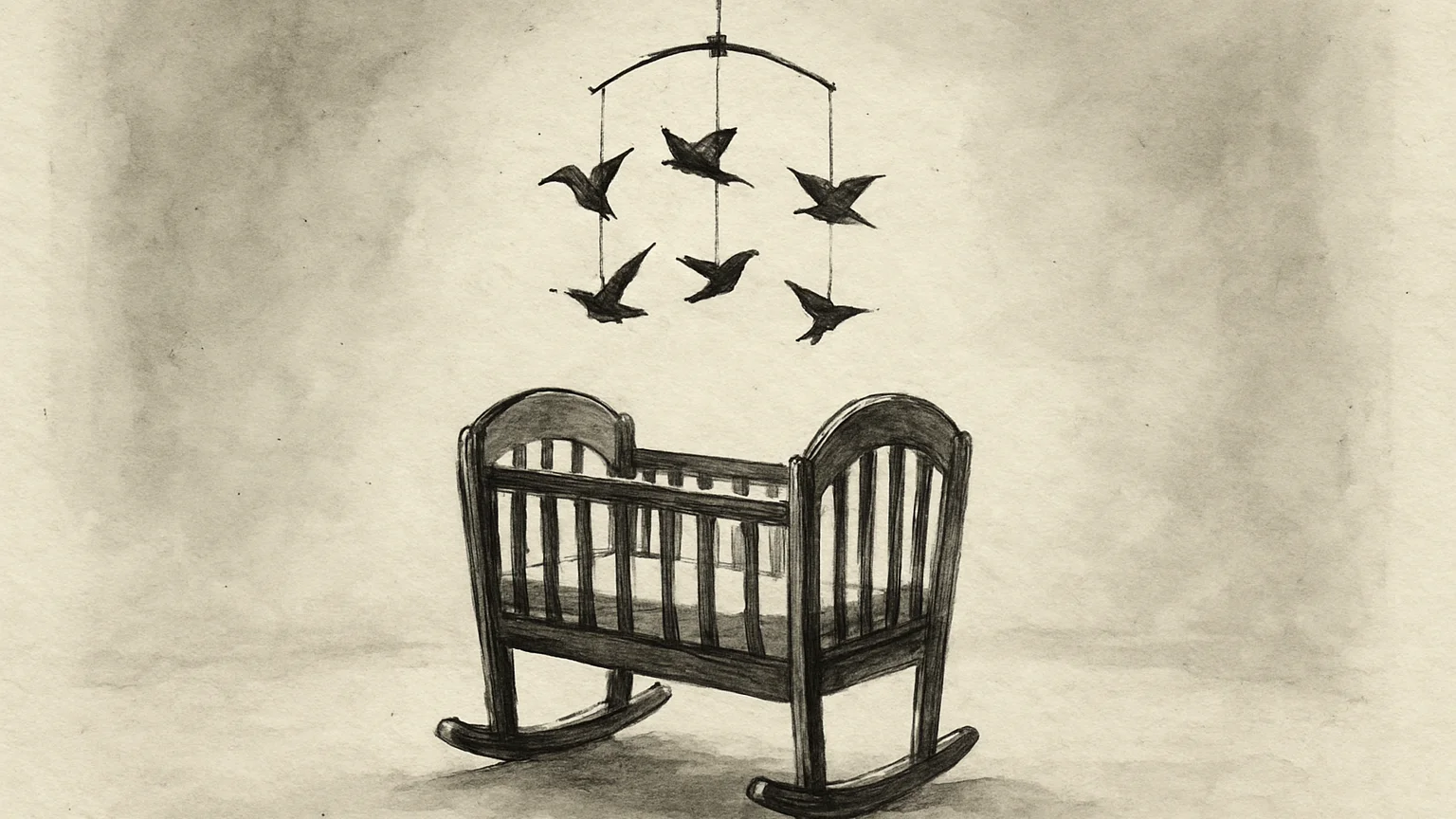
Dreams about babies are the pregnancy dream’s second act: the thing that was forming has arrived, and now it needs you. They tend to carry new beginnings with live demands — and for new parents they run by different rules entirely, darker and louder than the symbol, and worth understanding before any decoding starts.
What this dream might be about
The pregnancy page and this one split a single story between them, and the split is the meaning. Pregnancy is the not-yet — private, protected, still cancellable. The baby is the now: out in the world, visible, undeniable, and above all demanding. Nothing in the dream’s cast has the baby’s particular authority — a creature with no power whatsoever that nonetheless commands every room it enters, because its needs are absolute and its survival is assigned. When a dream produces a baby, it is almost always producing that assignment. Something new exists, it’s yours, and it cannot tend itself.
For anyone not currently raising one, that’s the reading to try first: what, in your life, is newly arrived and dependent? The just-launched venture in its first fragile quarter. The relationship at three months. The sobriety at sixty days. The new role, the new house, the new city — anything young enough that neglect would still be fatal. Baby dreams cluster at exactly these thresholds, and the dream-baby’s condition tends to be the report: thriving and heavy in your arms is one message; thin, quiet, or slipping from your grip is another. Dreamers sometimes realize, mid-dream, that they can’t remember when they last fed it — and wake knowing precisely which commitment the question was about. The dream does not deal in subtlety here. It deals in feeding schedules.
Sometimes the baby is younger than any venture — it’s a piece of you. The dream keeps a special place for the newly born self: the confidence just now standing up, the softness just re-emerging after a hard decade, the beginner you became the day you started over. These selves are real and they are infants — easily starved, easily dropped, unable to advocate for themselves — and the dream will hand them to you in baby form to ask how the custody is going. Dreamers who feel a strange, specific tenderness toward the dream-baby, a recognition they can’t place, are often holding exactly this. The dream isn’t asking whether you want children. It’s asking whether the newest part of you is getting fed.
And for new parents: your baby dreams are mostly not symbols at all, and the honest kindness of this page is to say so plainly. The postpartum months are the most intense dreaming season most adults ever experience — sleep shattered into fragments means waking mid-dream constantly, which means recall at maximum, while the vigilance system runs at a volume evolution set and you cannot adjust. The results are famous and awful: the baby lost in the blankets, forgotten at the shop, left in a running bath; the half-waking searches through the duvet for a child asleep in the crib beside you. These dreams are reported by a huge share of new parents, they run hardest in the most careful ones, and they predict and reveal nothing. They are the alarm system, drilling nightly, at the exact moment in life when it refuses to stand down.
None of these readings is the meaning. They’re the places this dream tends to visit. Which one it visited in you is something only your night, and the life around it, can say.
Forgetting or losing the baby
The classic, and the one that sends parents to search engines at 4 a.m. sick with guilt: the baby left on a train, at a dinner, in a previous scene of the dream you can’t get back to — and the bottomless lurch of remembering. Take the reassurance first and completely: near-universal, vigilance-driven, meaningless as prophecy or verdict. Then, for the non-literal version — dreamers with no baby who leave one somewhere anyway — the reading usually runs to the neglected new commitment: the project unopened for three weeks, the friendship in its fragile first year gone quiet, the new self unfed since the busy season started. The lurch in the dream is accurate. Something young of yours has been in the other room a while. The dream is just louder about it than the calendar was.
A baby suddenly in your care
Not yours — handed to you, found in your arms mid-scene, left with you by someone who exits the dream — and now the room assumes you’re in charge. This version trades in assigned responsibility: the duty that arrived without application — the team inherited in the reorganization, the aging parent’s affairs, the friend’s crisis that somehow became your portfolio, the role at work that was never posted and is nonetheless yours. Dreamers report the full range of responses, and the response is the reading: rising to it, resenting it, looking for who to hand it back to. All three are honest. The dream’s question is only whether you’ve noticed that the thing in your arms is real, and currently yours, whatever the paperwork says.
Finding a baby
Discovered — on a doorstep, in a room of the house that shouldn’t have one, somewhere improbable and suddenly urgent. Like the litter of kittens behind the shed, the found baby is the dream’s image for the discovered beginning: something new and alive has turned up in your life’s hidden corner — a possibility, a feeling, a calling — and it wasn’t planned, and it’s looking at you. The difference from the kittens is weight: a found baby cannot be quietly closed back into the drawer; the dream stages a decision that will not stay small. What you did next — picked it up, went looking for its owner, stood frozen — is the dream’s entire question, asked at newborn volume.
The baby that talks
It looks up at you and speaks — full sentences, sometimes adult ones, occasionally something devastatingly on-point — or it stands, walks, handles matters. Dreamers wake unsettled and often amused, and the uncanniness is the content: something in the new category is developing faster than its category allows. The three-month venture behaving like an institution; the new relationship having ten-year conversations; the beginner self suddenly fluent. Sometimes that’s pure good news — growth outrunning the schedule. Sometimes the talking baby says the thing you’ve been avoiding, in which case the dream has simply chosen its most unignorable messenger: no one dismisses a sentence delivered from a crib. What it said, if you can recall it, is worth writing down before it goes.
A crying baby you can’t soothe
Fed, changed, held, walked — and still the crying, rising through the dream like weather, in that register evolution tuned to be impossible to ignore. This version is the unmeetable need, and its address book is long: the person in your life whose distress absorbs everything you offer and continues; the job whose demands reset each morning; and — often, quietly — some part of the dreamer, crying from inside a life too scheduled to pick it up. The dream isn’t accusing you of failing to soothe. It’s rendering what it costs to stand inside a need you cannot fix, which is one of the heaviest ordinary experiences there is. If you woke exhausted, believe the dream: somewhere, you are doing that in daylight too, and it’s work.
The baby in danger
The dark version — falling, unwatched near water, in harm’s reach — and it belongs to the same family as the hardest dream on the dying page, where it’s treated in full: the parental alarm at maximum drill, common precisely in proportion to love, predictive of nothing. One register is specific to this page and worth naming for new mothers especially, because it frightens them into silence: half-waking images and dreams of harm coming to the baby — sometimes vivid, sometimes involving the dreamer’s own hands failing or worse — are far more common in the postpartum months than anyone says out loud, and they are not desires, warnings, or windows into character. They are the alarm system misfiring in an exhausted brain. If they stay in the night, they’re noise. If dread or intrusive images are filling your days as well, say so to a doctor or midwife — that pattern is postpartum anxiety’s signature, it is common, and it is very treatable. Either way: the dream is not who you are. The checking-on-them afterward — that’s who you are.
What matters more than the symbol
Here is the honest limit of a page like this one: the same baby weighs differently in different lives. A dream-infant during your startup’s first quarter is not one in the fourth month of your actual child’s life, and neither is the found baby dreamed by someone who just felt, for the first time in years, a new thing stirring. A dictionary can tell you what a word tends to mean. It cannot tell you what the sentence meant — and the dream you had was a sentence, spoken once, in your voice, in the middle of your particular life.
No one can tell you what your dream means — including us. What the baby was doing in your night depends on what surrounded it: what in your life is newest and how the tending is truly going, whose baby it was and how it came to be in your arms, and what you felt holding it — tenderness, panic, recognition, or the specific weight of something that is yours now. Those details are where the meaning lives, and they belong to you.
Before you go looking for meaning
One practical note. If there is a real baby in your house, your dreams are currently being produced under special conditions: sleep in fragments means surfacing mid-dream many times a night, which is precisely what makes dreams remembered — so new parents recall more dreams, more vividly, than almost anyone, at exactly the moment the mind’s material is a small person’s survival. Every actual sound crosses into the dream; every wake-up interrupts a reel already running. The postpartum months are, measurably, peak nightmare-recall season for parents — which means the dark dreams are the machinery, not a message. So before the symbol, the census this page owes you: is there a baby in the room? Then the baby in the dream is probably that one — and the dreaming will quiet as the sleeping does. It really does, eventually, do both.
Frequently asked questions
What does dreaming about a baby usually mean?
Where the pregnancy dream carries the not-yet — something still forming, still private — the baby dream carries the arrived: something new, real, and out in the world that now depends on tending. The pattern most often reported ties it to fresh beginnings with live demands: the just-started job, relationship, recovery, or venture in its fragile first stretch. New parents, of course, are usually just dreaming the actual baby — those dreams have their own rules, covered below.
I dreamed I forgot my baby somewhere — does that make me a bad parent?
No — and it may help to know this dream is close to universal among parents of young children. Forgetting, losing, or misplacing the baby is the caretaking mind's standard rehearsal, and it runs hardest in the most vigilant parents, not the least: the dream drills the failure precisely because failing is unthinkable to you. It predicts nothing and reveals nothing except how seriously the responsibility has been taken on board.
I don't have children — why am I dreaming about babies?
Because the dream-baby's job description is broader than parenthood: it's the new thing that has arrived and needs you. People dream babies at the start of ventures, relationships, recoveries, and chapters — anything young, promising, and unable to survive neglect. What the dream is usually asking is how the tending is going. If something newly begun in your life is thriving, or crying, the dream may simply be its status report.
I'm a new parent having disturbing dreams about my baby — is this normal?
Very — the postpartum months are peak season for vivid, distressing baby dreams, driven by shattered sleep (which multiplies dream recall) and a vigilance system running at full volume. Dreams of the baby lost, in danger, or in the bed are reported by a large share of new parents and forecast nothing. One honest addition: if fear or intrusive images fill your waking hours too, that pattern has a name — postpartum anxiety is common and very treatable, and it's worth telling your doctor or midwife. The dreams alone, though, are just new parenthood, dreaming.