Dreams About Your Partner Cheating — What They Might Mean
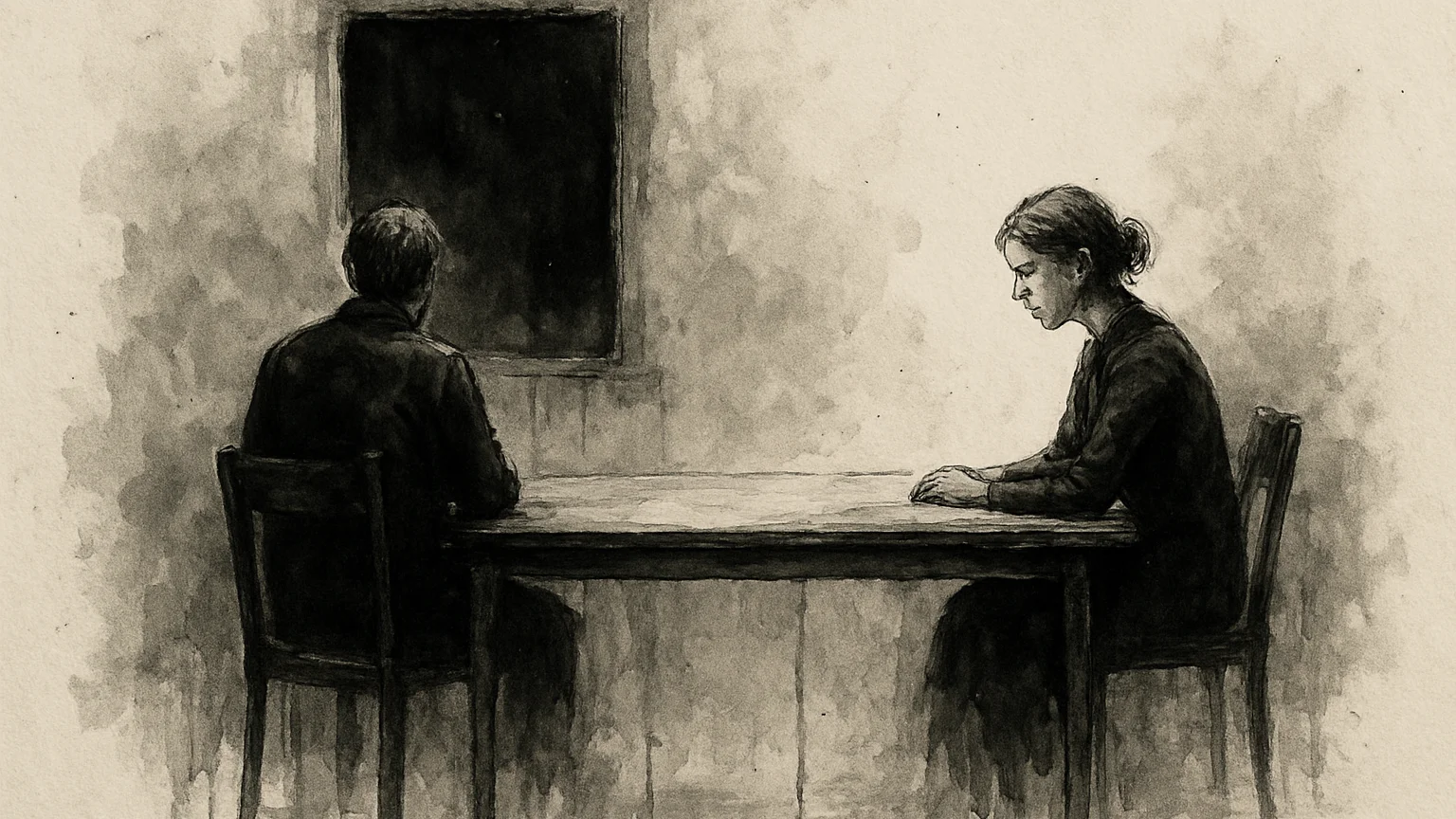
Dreaming that your partner cheated is one of the most common relationship dreams there is, and it is not evidence that they did. These dreams are built from the dreamer’s own material — fear of losing someone, the feeling of being less chosen lately — and they say far more about what you’re afraid of than about what your partner is doing.
What this dream might be about
Few dreams cross into daylight the way this one does. People wake with their heart pounding, turn to the innocent person asleep beside them, and feel — for one unreasonable hour, sometimes a whole day — genuinely betrayed. It’s the only dream that routinely starts real arguments about fictional events. So before any reading, this page owes you the ground rule: a dream is not information about your partner. It’s information about you.
That’s not a consolation; it’s how dreams work. Everything in the dream — the rival, the discovery, your partner’s face as you confronted them — was manufactured from your own inventory: your fears, your attachment history, the particular insecurity this month has been feeding. The dream can’t know anything you don’t. So the honest question it leaves behind is never “what are they doing?” It’s “what am I afraid of losing — and why did that fear need a story tonight?”
As for why tonight: these dreams cluster in recognizable weather. Times of distance, literal or otherwise. A new baby, a consuming job, a phone that gets more of their face than you do. A move, an anniversary of an old wound, a week of feeling less interesting than whatever else is claiming them. The rival in the dream often isn’t a person at all, underneath — it’s whatever is currently receiving the attention you’re missing, issued a body for the night.
And if there has been real infidelity — in this relationship or one before it — these dreams can go on arriving long after the crisis, and that isn’t a verdict on your healing. It’s the mind pressing on a healed-over place to check it still holds. For most people the pressing grows rarer as safety accumulates. The dream is doing wound-care, clumsily. It is not reopening the case.
Catching them in the act
In the dream, they aren’t even sorry. That detail — reported constantly — is often the part that hurts most: not the act but the indifference, your partner regarding your devastation with mild inconvenience. It’s a useful tell about what the dream is actually staging. The scene isn’t reconnaissance; it’s your worst fear given a script — what if I mattered less than I think — performed by the person whose face makes it unbearable.
Waking up angry at your innocent partner
The dream ends and the argument doesn’t. If you’ve ever spent a morning furious at someone for a thing their dream-double did — or been on the receiving end of that fury — you’re in very large company. The anger is real even though its cause isn’t, because the feeling came first and the dream merely gave it a plot. The kindest move, once your pulse settles, is to prosecute the feeling, not the person: something made you afraid of losing them, and that something is worth a real conversation more than the dream-crime is.
The other person is someone you know
The dream needed a face and took the nearest one. A friend, a coworker, their ex — familiar faces get this role not because you’ve sensed something but because they’re available, and because of what they stand next to. A colleague cast as the rival is often the job wearing a person; their ex in the role is usually your own comparison anxiety, dressed up and given lines. Be very slow to let the casting change how you treat the real human. They didn’t audition.
You’re the one cheating
You would never. And yet there you were — mid-affair, hiding a phone, feeling the specific dread of almost being caught. Dreamers wake from this one interrogating themselves, and the interrogation is usually the answer: your horror is your values, reporting for duty. These dreams tend to be about division rather than desire — a life split between duty and a shelved self, a hunger for something that isn’t a person at all: freedom, novelty, who you were before. When the affair in the dream is with an ex, the ex is usually shorthand for an era, and that’s a page of its own.
They leave you for them
The affair was never the point. In the versions that continue past discovery — your partner packing, choosing, walking out with someone whose face you’ll have forgotten by breakfast — the dream finally shows its actual subject: not sex, abandonment. The rival is a plot device; the leaving is the fear. Dreams that go this far tend to visit people carrying an old question about whether love, once given, stays. That question predates your partner. The dream just hired them to ask it.
What matters more than the symbol
Here is the honest limit of a page like this one: a camera records the room it’s pointed at. A dream is not a camera — it’s a mirror with a plot. Two people can dream the same discovery, the same unfamiliar bed, and be dreaming about entirely different things: one about a partner’s absorbing new job, the other about a father who left thirty years ago. The scene is common property. What’s projecting it never is.
No one can tell you what your dream means — including us. It depends on what only you know: what this month has been quietly costing you, who the rival resembled and what that person stands beside in your life, whether dream-you fought or went numb, and what you felt in the first second of being awake — rage, or grief, or the strange relief that it wasn’t true. That’s the material. The dream was only ever the projection.
Before you go looking for meaning
One practical note. These dreams are remarkably suggestible. They spike after infidelity plotlines — a show, a film, a friend’s breakup told in detail over dinner — and in life stages where closeness is being renegotiated anyway: early relationships, pregnancies, long-distance stretches. The plot came from somewhere, and it’s rarely your bedroom. So before the morning interrogation, check what you fed your mind last night. A dream is weather, not testimony.
Frequently asked questions
Does dreaming that my partner cheated mean they're actually cheating?
No. A dream cannot see your partner's phone, their messages, or their heart — it's built entirely from your own material: your fears, your history, your week. It isn't evidence and shouldn't be treated as any. If a trust worry exists in waking life, it deserves a waking conversation, on its own evidence — not the dream's.
Why do I keep having dreams about my partner cheating?
These dreams tend to repeat while the feeling underneath them does — a period of feeling less chosen, more distant, or less sure of your place with someone. They're also common long after a real betrayal, in this relationship or a past one, as the mind re-checks an old wound. The dream usually quiets as the feeling of safety returns.
I dreamed I was the one cheating — does that mean I want to?
No. Dreams stage scenarios; they don't confess wishes — and the horror you woke with is the actual data about your values. Dreams like this are often about being divided somewhere in life: a self that got shelved, a freedom that got traded, a pull toward something that isn't a person at all. The guilt is real. The verdict isn't.
Should I tell my partner about the dream?
It depends entirely on the delivery. Told as an accusation, or while the anger is still warm, it lands as one. Told later, as something strange your sleeping mind did — even something to laugh about — it can actually bring closeness. And if the dream touched a real insecurity, talk about the insecurity itself. Your partner can answer for the feeling. They can't answer for a crime committed by a character in your sleep.