Dreams About Snakes — What They Might Mean
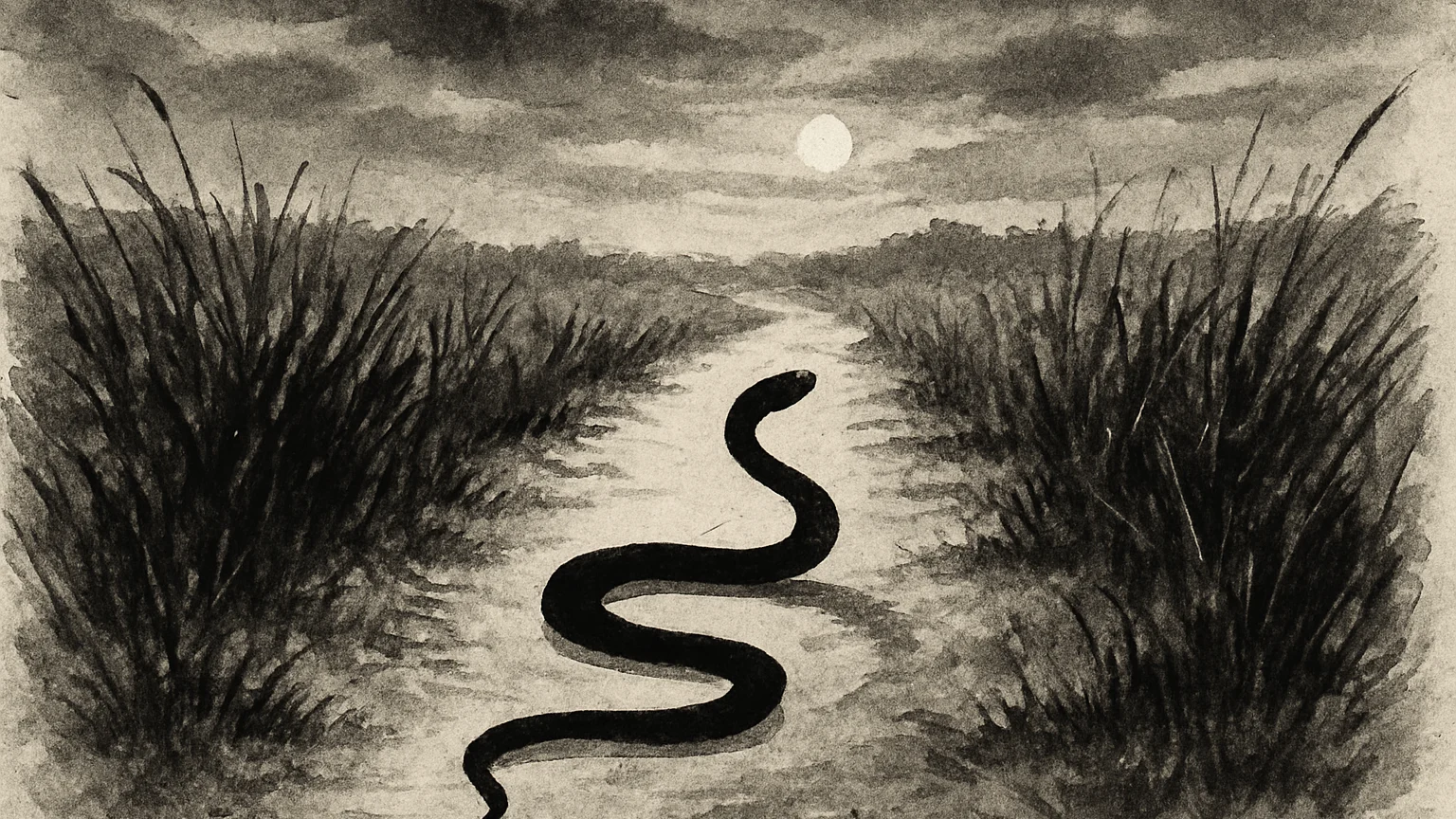
Snakes are among the most commonly dreamed animals in the world, and dreaming of one doesn’t predict betrayal or bad luck. Snake dreams tend to come when something feels dangerous to approach but impossible to ignore — a threat, a truth, a change already underway. What the snake was doing matters more than the snake.
What this dream might be about
The body knows snakes before the mind does. That low, moving shape gets flagged by something older than thought — people startle at garden hoses, at a belt on the floor in dim light. So a snake enters a dream already loaded: it doesn’t have to do anything to raise the temperature. Whatever the dream wanted you to feel about the situation it was building, the snake delivered it instantly.
What it delivered, though, is genuinely double. This is the animal on the pharmacy sign and the animal in the warning — venom and medicine, for most of recorded history, from the same mouth. It’s also the animal that outgrows its own skin and leaves it behind in one piece. Very few symbols hold their opposites this comfortably, which is why the dictionaries can’t agree on this one: a snake can be the danger itself, or a change arriving dressed as danger.
Then there’s the thread the idiom hands you. A snake in the grass is a threat that got close without being noticed, and many dreamers wake from a snake dream already reading it that way — trust, proximity, the person or situation moving quietly at ankle height. Sometimes that reading fits. The caution is that the idiom arrives pre-installed, and a dream will happily wear whatever meaning you walked in with. (Yes, there’s also the famous reading — some snakes may carry desire, but snakes meant a great many things for a few thousand years before psychoanalysis narrowed the list.)
And sometimes the snake is the shed skin more than the fangs. If something in your life is ending — a role, a habit, a self you’ve outgrown — the ending can feel like a threat long before it feels like relief. A snake dream in that stretch may be less about what’s coming for you and more about what you’re leaving behind, still lying there in the grass, holding your old shape.
The snake carries all of this at once. Which part it carried into your night is not something the animal alone can say — it’s in what the snake did, and what you did back.
Being bitten by a snake
The bite is usually where the dream ends — or where it finally starts. Until that moment the threat was circling, and dreamers often report the strange relief inside the fear: the worst thing stopped being about to happen. People tend to remember the exact place they were bitten, and while there’s no reliable chart of hands and ankles, the spot is at least where the dream concentrated its fear. The question the bite leaves behind is about venom — whether the dream let something into you, or showed you something that was already there.
A snake chasing you
Real snakes almost never pursue. A snake that follows you through a dream is breaking its own rules — which may be the point. This isn’t a danger you wandered near; it’s one that has singled you out and won’t be left behind by walking faster. Dreams of pursuit have their own long story, and when the pursuer is a snake, the flavor is specific: something quiet, low, and patient that you cannot outpace.
A snake in the house — or in your bed
Here the location does the talking. A snake outdoors is in its territory; a snake in your kitchen is in yours, and a snake in your bed has crossed every line there is. This version of the dream tends to be about where the threat lives — not out in the world but inside the walls, inside the safe room, sometimes inside the relationship the bed belongs to. The closer the snake gets to where you sleep, the more personal the question it’s asking.
Many snakes at once
The floor is moving. When a dream fills with snakes — a pit, a room, ground you can’t cross — the fear changes kind: it’s no longer about one danger but about a world that has stopped being walkable. This is often how overwhelm dreams itself, the moment when worry stops being a thing and becomes a texture. It may matter that in these dreams the snakes usually aren’t attacking. There are simply too many to track, and that’s the whole horror.
Killing the snake
What stays with dreamers here is usually the after — the strange quiet, the checking that it’s really dead, the way triumph and unease arrive together. Ending a threat in a dream can feel like resolve, and it can feel like silencing something before it finished speaking. Some wake stronger. Some wake wondering what, exactly, they just refused to hear. Both reactions are information.
Black snakes, white snakes — does the color matter?
Less than the charts suggest. Dream dictionaries assign colors like paint swatches — black for the unknown, white for something purer, green for growth or envy, yellow for caution — and the assignments mostly cancel each other out across books. If a color struck you, take it seriously as atmosphere: black snakes come with a darker dream around them, and that darkness is real. But a calm black snake and a striking white one are two different dreams, whatever the swatch says. Behavior first, color second.
What matters more than the symbol
Here is the honest limit of a page like this one: the same snake plays a different part in every dream it enters. A snake watched from a distance is not a snake in your bed, and neither is the one that looked at you and simply left. A field guide can tell you the species, the markings, whether it’s venomous. It cannot tell you why the snake was in your kitchen — or why, this time, you weren’t afraid.
No one can tell you what your dream means — including us. What the snake was doing in your night depends on everything around it: who else was there, whether you froze or followed, what you felt in the second before you woke. Those are the details the dictionaries can’t see, and they’re yours.
Before you go looking for meaning
One practical note. Fear has its own gravity in dreams. If you saw a snake on a trail last week, watched one on a screen, or live somewhere they’re a real concern, the dream may simply be the mind filing a dangerous shape where it files all dangerous shapes — and people with a genuine phobia dream their fear far more often, in higher definition, than everyone else. That kind of snake dream is real, but it’s about the snake, not about your life. Not every snake is a message. Some are just memory, doing its rounds.
Frequently asked questions
Are snake dreams good luck or bad luck?
It depends on who you ask — and that disagreement is the honest answer. Western folklore reads snakes as warnings; in several East Asian traditions, a snake dream is a sign of coming fortune. Dreams don't deal in luck either way, but the fact that one animal carries both readings says something true about snakes: they hold danger and renewal at once.
What does it mean if a snake bites me in a dream?
The bite is usually the dream's sharpest moment — the point where a circling threat finally makes contact. It often shows up when something you've been keeping at a distance gets through: a fear, a conflict, a truth. It isn't a prediction. It's the feeling of impact, arriving early.
Does dreaming about a snake mean someone is betraying me?
No dream can identify a person, and treating one as evidence is a fast way to wrong someone you trust. The snake-in-the-grass reading is cultural shorthand, and sometimes the dream does trade in trust — but if you woke suspicious of someone specific, that suspicion was there before you slept. The dream is a place to notice it, not a verdict.
I'm scared of snakes in real life — is that why I dream about them?
Very possibly. People with strong fears dream about them more, and one theory of dreaming holds that nightmares are the mind practicing threats in safety. If your snake dreams feel like your phobia on replay, they may be less about your life and more about the fear itself — which doesn't make them meaningless, just more literal.