Dreams About Dogs — What They Might Mean
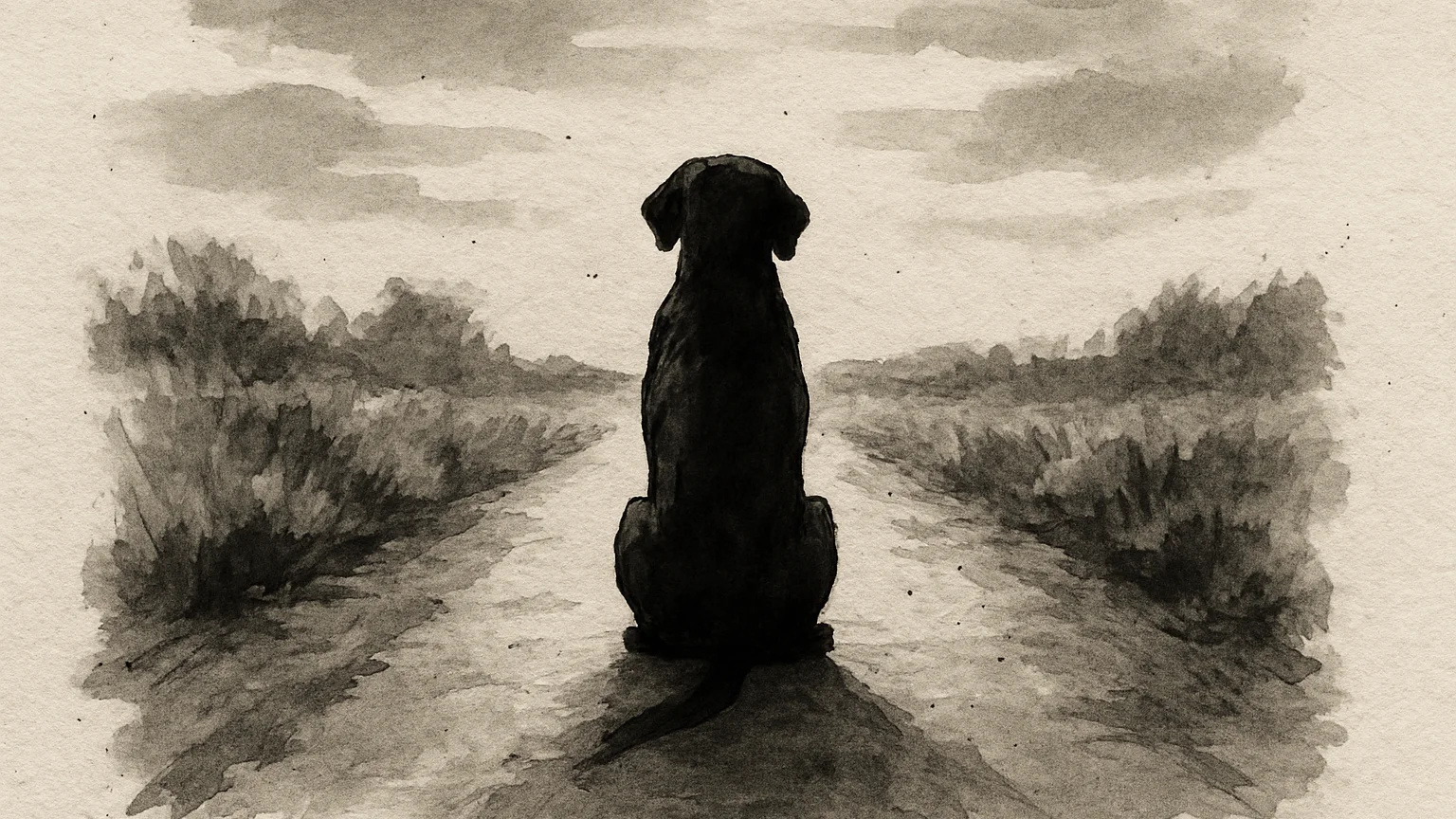
Dogs are the most personally known animal in the dream world — which changes everything about dreaming them. Dog dreams tend to run on loyalty, trust, and grief for companions gone, and they hold a distinction no other animal page needs: sometimes the dog is a symbol, and sometimes the dog is your dog.
What this dream might be about
The snake and the spider enter a dream as strangers. The dog almost never does. This is the animal that has slept within reach of us for tens of thousands of years — the one whose face people can read as easily as a human face, the one dreamers routinely recognize as an individual: my dog, my childhood dog, the dog from that house on that street. No other animal arrives in dreams carrying this much biography, and it means dog dreams split at the root. Before any interpretation, one question: was this a dog — the species, the symbol — or was it a dog, one you know or knew? Because the second kind often needs no dictionary at all. It needs the next paragraph but one.
When it’s the symbol, the dog’s portfolio is loyalty — and the dream tends to use it as an instrument for measuring exactly that. Dogs in dreams track the state of your alliances: who’s in your corner, who walks beside you, what it currently feels like to be accompanied or not. A dog trotting calmly at your heel through an otherwise anxious dream is doing real work in the composition — you were not alone in there, and some part of you knows it. An empty leash, a dog that won’t come when called, a dog watching you leave: same instrument, different reading. When this dream arrives, it’s worth taking inventory not of the dog but of the pack — the two or three loyalties, given and received, that currently hold your life. The dream usually has one of them in mind.
And sometimes the loyalty under examination is yours — the dream casting you nearer the collar than the hand. Dogs are what devotion looks like with no exit strategy: faithful past self-interest, glad on command, waiting at doors long after the person stopped deserving the wait. Dreamers who feel a strange kinship with the dream’s dog — or who are, in the dream’s slippery way, somehow also the dog — are often working on exactly that material: where their own faithfulness has been noble, and where it has quietly become waiting at a door. It’s the gentlest question this dream asks, and one of its sharpest: what are you still loyal to, and is it still loyal back?
But the reading that brings the most people to a page like this is grief. Dreams of dogs who have died — your own, returned, usually young and well and simply present, the dream offering no explanation and needing none — are among the most common grief dreams there are, and among the most mercifully gentle. People wake from them in tears that aren’t entirely sad. If that’s the dream that brought you here: it isn’t a haunting, it isn’t denial, and it doesn’t need decoding. Love keeps the shape of what it loved, and at night, sometimes, it runs the old routes. The dead-companion dream has its own longer story on this site, and everything there holds for the four-legged dead as well.
The dog carries all of this at once. Which part it carried into your night is in what the dog did, whether you knew its name — and what you felt when it looked at you.
A dog attacking or biting you
The most searched version, and the one that shakes people most — precisely because it breaks the animal’s contract. A striking snake is a snake doing snake things; a dog with its teeth in you is an ally gone wrong, and the dream tends to trade in exactly that register: trust turning, a safe person or place showing a side you hadn’t priced in, loyalty revealing conditions. The other reading runs through the leash — dogs are also domesticated force, and an attacking dream-dog is sometimes anger itself slipping its usual restraint: yours, held too long at heel, or someone else’s you’ve sensed straining the collar. Either way, the dream is not a verdict on any real dog, and it is not evidence against any real person. It’s the feeling of teeth where trust was — and the question of whose.
A growling dog blocking the way
No bite — just the low sound, the fixed eyes, the path unavailable. Threat held in suspension is its own dream, and this one tends to guard thresholds: the dog stands between you and a door, a road, a house you were heading toward, and something in you believes it. It often maps onto waking passages that feel defended — the conversation you’d have to get past someone’s anger to reach, the decision guarded by a consequence, the part of your own history with a growl on the gate. Black dogs get special billing here, trailing centuries of lane-haunting folklore and the old phrase for heavy weather of the mind — and as with snake colors, treat the swatch lightly but the atmosphere seriously. A dream that posts a dark sentry on your path is describing how defended something feels. It says nothing about whether the door can still be opened.
Your own dog lost or in danger
The dream takes the actual dog — the one asleep downstairs right now — and loses it: slipped through a gate, running toward a road, in water, simply gone, and you searching with that specific full-body panic. Symbol-hunting is mostly wasted here. This is a caretaking dream about a real dependent, and it visits dog owners the way losing-the-child dreams visit parents, for the same reason: the mind rehearses the custody of what it loves. It clusters when the stakes are somehow live — a dog aging, a health scare, a move coming — and sometimes when the dependency it’s rehearsing is elsewhere in life and the dog is just the nearest beloved stand-in. If you woke and went to check on them: that was the dream working as designed.
A dog that died, returning
Covered above, but the variation deserves its own door, because so many arrive looking for exactly this. The signature is consistency: the dog comes back well — young again, whole again, doing the ordinary things, greeting you as if no time has passed — and the dream rarely mentions the death at all. Dreamers sometimes know, inside the dream, and choose not to say it aloud, protecting the visit. These dreams cluster in the first year, return around anniversaries and in the weeks after grief is stirred — moving house, finding the old collar, another loss — and they change over time, generally softening from ache toward company. Nothing here needs fixing or interpreting. Some dreams are not messages. Some are just the heart, off-leash for a night, running with what it misses.
A stray that follows you
It falls in behind you somewhere mid-dream — unowned, uninvited, patient — and by the end it’s simply yours, or asking to be. Dreamers tend to remember the moment of deciding: shooing it, ignoring it, or crouching down. This version usually trades in unclaimed loyalty — something faithful circling your life that hasn’t been given a name yet: the friendship that’s become more central than you’ve admitted, the person quietly showing up for you, sometimes a neglected piece of your own self padding along behind, waiting to be let back in. What you did with the stray is the dream’s whole question, asked in fur: something is offering to belong to you. Are you taking it in?
Puppies
A basket of them, a litter discovered somewhere improbable, one asleep in your hands. Puppy dreams run warm but they aren’t empty calories — puppies are loyalty in its beginning state, all future and dependency, and the dream tends to reach for them when something new needs raising: a project just born, a relationship in its first months, a responsibility recently arrived that is equal parts delight and unrelenting need. Notice the dream’s arithmetic — one puppy asleep on your chest is tenderness; seven, hungry, in a house you’re somehow in charge of, is the other thing this dream measures. New commitments are wonderful the way litters are wonderful. The dream is fond of them too. It’s just also counting.
What matters more than the symbol
Here is the honest limit of a page like this one: the same dog plays a different part in every dream it enters — and this animal, more than any other, may not be playing a part at all. A growling stranger-dog is not your childhood dog at the foot of the stairs, and neither is the one who died in March and came back last night, young, carrying the old ball. A field guide can tell you the breed, the temperament, what the posture means. It cannot tell you why this dog, in your hallway — or why you knew its name.
No one can tell you what your dream means — including us. What the dog was doing in your night depends on everything around it: whether you knew it, what it guarded or offered, whether you reached out or backed away, and what was in its face when it looked at you. Those are the details the dictionaries can’t see, and they’re yours.
Before you go looking for meaning
One practical note. If you live with a dog, your nights are not a controlled experiment. The animal asleep against your legs is real sensory material — the weight, the sigh, the 3 a.m. bark at nothing — and sleeping minds famously weave the bedroom into the dream, so dog owners simply dream more dogs, the way the recently traveled dream more airports. Grief has its own honest gravity too: in the months after losing a pet, dog dreams aren’t a mystery to solve, they’re the expected weather of missing someone. So before the symbol, the census: is there a dog in the bed, or a dog-shaped absence in the house? Not every dog is a message. Some are just the one who’s actually there — or the one who recently, unbearably, isn’t.
Frequently asked questions
What does dreaming about dogs usually mean?
Dogs are the dream world's native speakers of loyalty, and the pattern most often reported ties dog dreams to the state of trust and companionship in waking life — friendships, partnerships, the people (and creatures) in your corner. But dogs are also the animal dreamers most often know personally, so before reaching for symbols it's worth asking the literal question first: was this a dog, or was it your dog?
What does it mean if a dog attacks me in a dream?
An aggressive dog carries a different charge than an aggressive snake or stranger, because dogs are supposed to be on our side — so the attack tends to trade in trust turning: an ally gone hostile, a safe thing showing teeth, or anger (yours or someone's) slipping a leash it usually wears. It isn't a prediction about any real dog, and it isn't evidence against any real person.
Why did I dream about my dog who died?
Because grief dreams, and pet grief dreams hard. Dreams of dead pets returning — usually well, usually young again, usually just *there* — are among the most commonly reported grief dreams, and most people wake from them comforted rather than distressed. It isn't a visitation you need to explain or a wound reopening. It's memory and love, still running. They tend to come most in the first year and soften in frequency after, arriving again around anniversaries.
Is a black dog in a dream a bad omen?
Folklore says yes and no at once — British legend filled the lanes with ominous black dogs, while other traditions read dogs of every color as guardians and luck. Dreams don't deal in omens either way. A black dog does tend to arrive with a darker dream around it, and 'the black dog' has long been a phrase people reach for to describe heavy moods — so if yours felt like weather rather than animal, that atmosphere is worth taking seriously as atmosphere. But it's a mood the dream rendered, not a forecast.